
Panoramica API
URL di base
Sezione intitolata “URL di base”https://api.factum.pyragogy.org
postman_collection.json
Importabile in Postman, Insomnia, Bruno
L’API è basata su FastAPI/OpenAPI. Il deployment su marketplace è un canale di distribuzione proxy; l’URL pubblico e l’iniezione dell’autenticazione non corrispondono necessariamente al contratto API d’origine.
Autenticazione
Sezione intitolata “Autenticazione”Gli endpoint business richiedono:
X-API-Key: <la-tua-chiave-api>Il backend è fail-closed: una chiave mancante o non valida restituisce
401 Unauthorized. Il confronto usa secrets.compare_digest.
Endpoint pubblici:
GET /healthGET /status
Sorgenti richiesta
Sezione intitolata “Sorgenti richiesta”POST /v1/parse accetta esattamente una sorgente:
| Campo | Tipo | Obbligatorio | Note |
|---|---|---|---|
job_id |
UUID | XOR | Job restituito da /v1/uploads |
text |
string | XOR | Input stateless, scope richiesta |
doc_type |
enum | no | auto, fattura, f24, generico; default auto |
async_mode |
boolean | no | Modalità async; non valida con text |
callback_url |
URL HTTP | no | Solo con async_mode=true |
job_id e text sono mutuamente esclusivi — uno dei due deve essere presente.
POST /v1/uploads accetta un singolo campo multipart:
file=<XML o PDF>Non esiste un campo filename separato nel contratto backend; FastAPI riceve il
nome file come metadata UploadFile.filename.
Il limite di trasporto e semantico è 10 MiB (max_body_bytes e
max_upload_bytes). Le classi documentali supportate sono FatturaPA XML e
fattura PDF.
💨 Latenze di elaborazione (misurate)
Sezione intitolata “💨 Latenze di elaborazione (misurate)”Latenza end-to-end, dal momento in cui il documento entra nell’API alla risposta completa. Scala logaritmica: i percorsi deterministici rispondono in millisecondi, il percorso LLM in secondi.
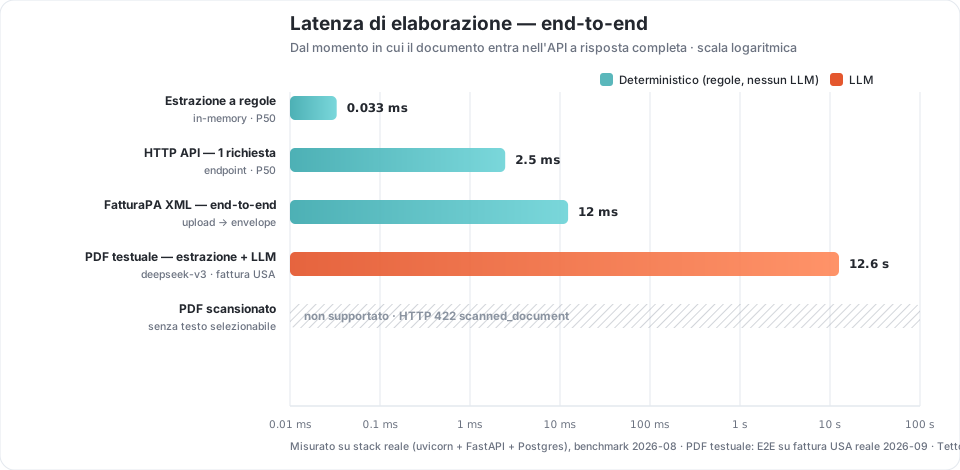
| Percorso | Latenza misurata | Motore | Note |
|---|---|---|---|
| Estrazione a regole (in-memory) | ~0.03 ms (P50) | Deterministico | Nessun LLM |
| HTTP API — 1 richiesta | ~2.5 ms (P50) | Deterministico | Benchmark stack reale |
| FatturaPA XML — end-to-end | ~12 ms | Deterministico | Consigliato per integrazioni |
| PDF testuale (estrazione + LLM) | ~10–15 s | LLM (deepseek-v3) | Margine di miglioramento in roadmap |
| PDF scansionato | non supportato | — | HTTP 422 scanned_document |
Cosa significa per te
Sezione intitolata “Cosa significa per te”- Integrazioni XML (FatturaPA): percorso deterministico, ~12 ms, nessun LLM.
È la via maestra consigliata: bassa latenza, costo stabile, risultato garantito
dalla quadratura verificata (
totale ≈ imponibile + IVA). - PDF testuale: supportato, ma il percorso LLM richiede ~10–15 s. Il margine di miglioramento su questa latenza è in roadmap — resta un percorso valido per documenti non strutturati (fatture estere, F24, testi liberi).
- PDF scansionati (senza testo selezionabile): rifiutati con
422(scanned_document). È una scelta architetturale dichiarata: Factum elabora de documenti digitali, non immagini. La latenza di ogni percorso è misurata e monitorata via Prometheus.
Raccomandazione: per integrazioni di produzione usa FatturaPA XML — la latenza è ~12 ms e il risultato è deterministico. Usa il percorso testo/PDF solo quando il documento non è disponibile in formato XML.
Rate limiting
Sezione intitolata “Rate limiting”Il rate limiting è configurabile tramite impostazioni d’ambiente. Quando attivato
(header X-Tier: free | basic | pro), il middleware può emettere
429 Too Many Requests.
Limiti correnti (da app/services/ratelimit.py):
| Tier | Limite | Finestra |
|---|---|---|
free |
60 req/min | 1 min |
basic |
100 req/min | 1 min |
pro |
1000 req/min | 1 min |
Livelli di risposta
Sezione intitolata “Livelli di risposta”Esistono due contratti distinti:
DocumentResponse— metadata di ingestion/job restituiti da/v1/uploadse/v1/uploads/{job_id}.ParseResponse— metadata di esecuzione del parsing piùresult: DocumentEnvelope | null.
DocumentEnvelope v2 è il risultato strutturato canonico dentro
ParseResponse.result. Vedi Schemi.
Request ID
Sezione intitolata “Request ID”Il backend accetta correntemente X-Request-Id su POST /v1/uploads e lo usa come
valore instance RFC 7807 quando viene generato un errore upload.
Un header X-Request-ID globale in risposta non è attualmente implementato su
tutte le rotte. Non documentarlo come garanzia universale finché il backend non
aggiunge e testa quel middleware.
Questo è debito documentale intenzionale, non una funzionalità inventata.